Vlada991 je napisao:
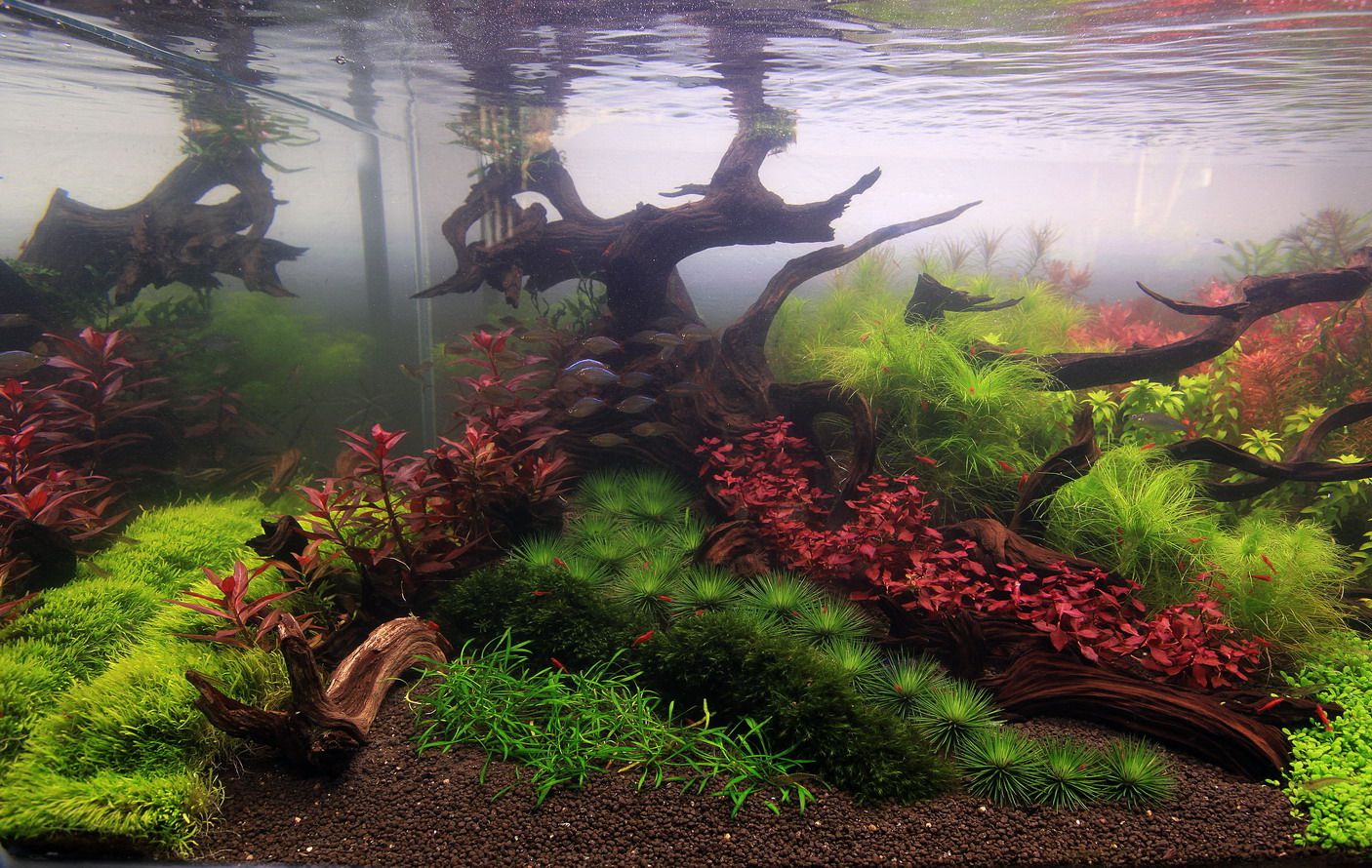
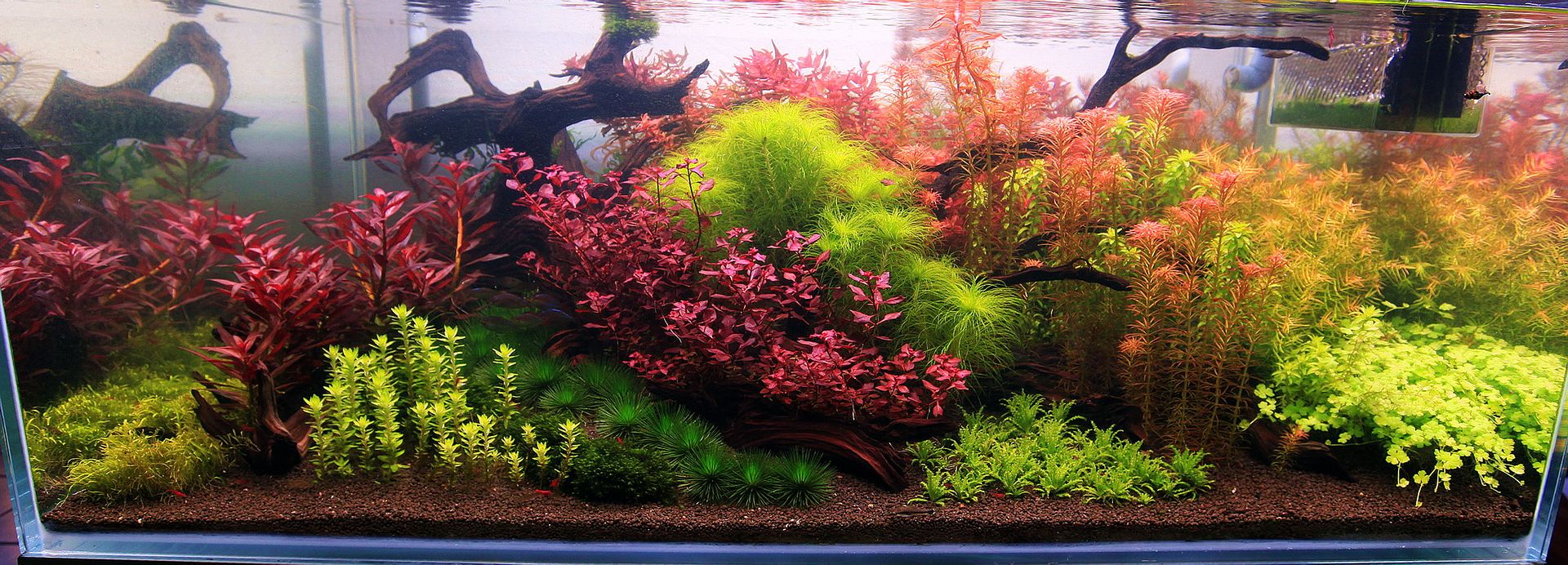
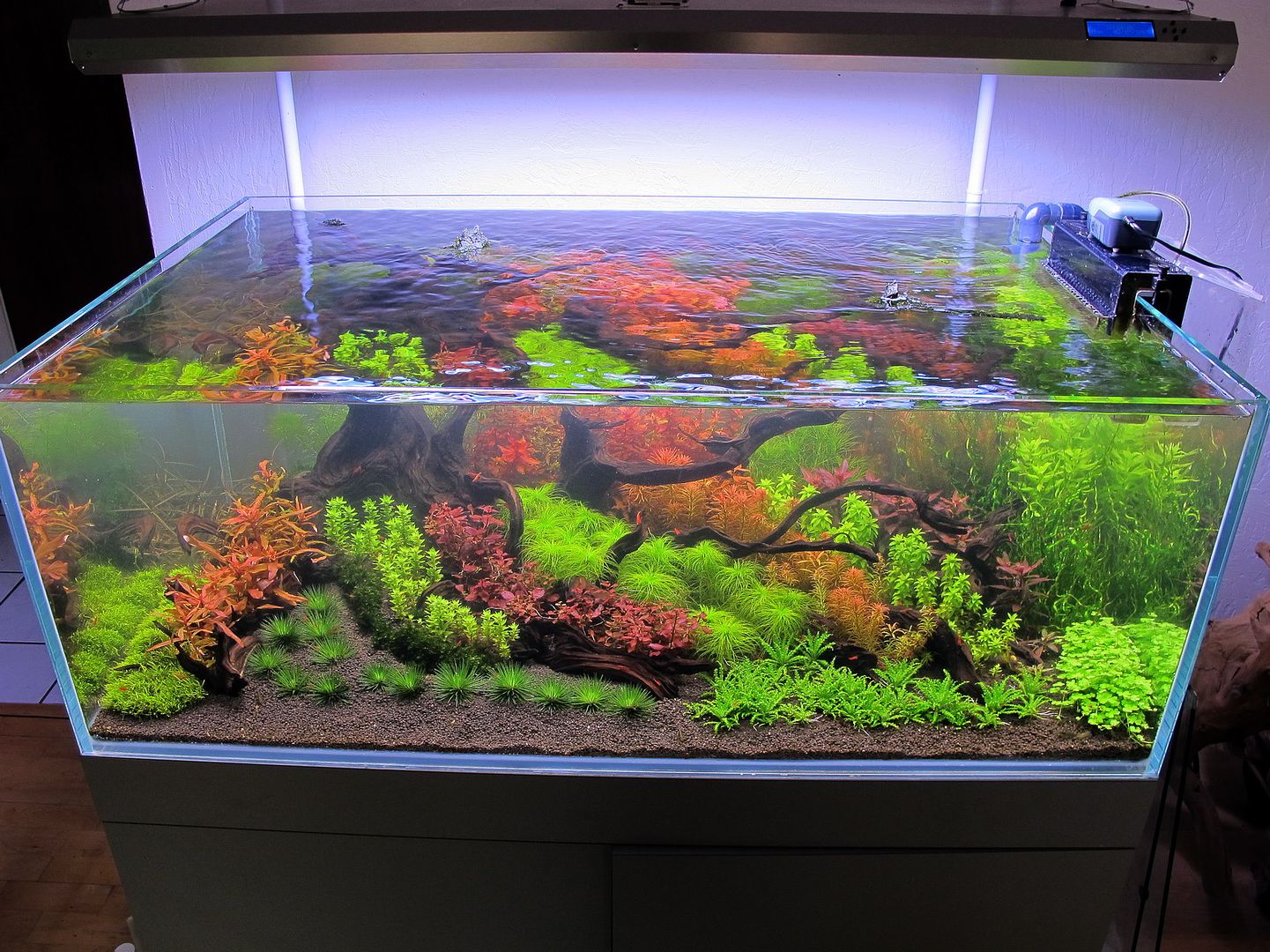
It's so colorfull, its kinda interesting. That's a very nice root...By the way, your 1st hard scape could look really nice with some interesting stone.
I look forward for new colorfull pics!
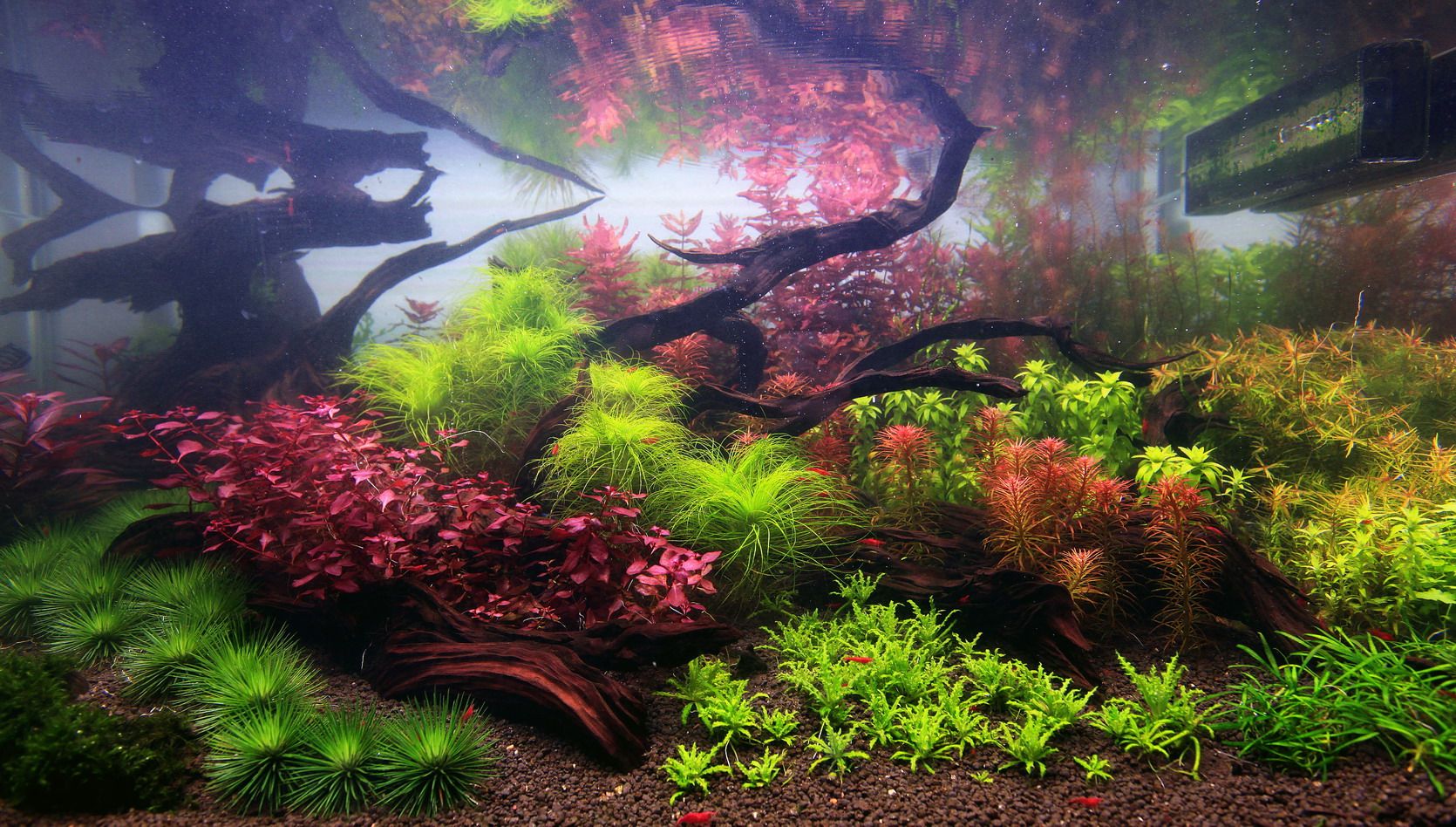
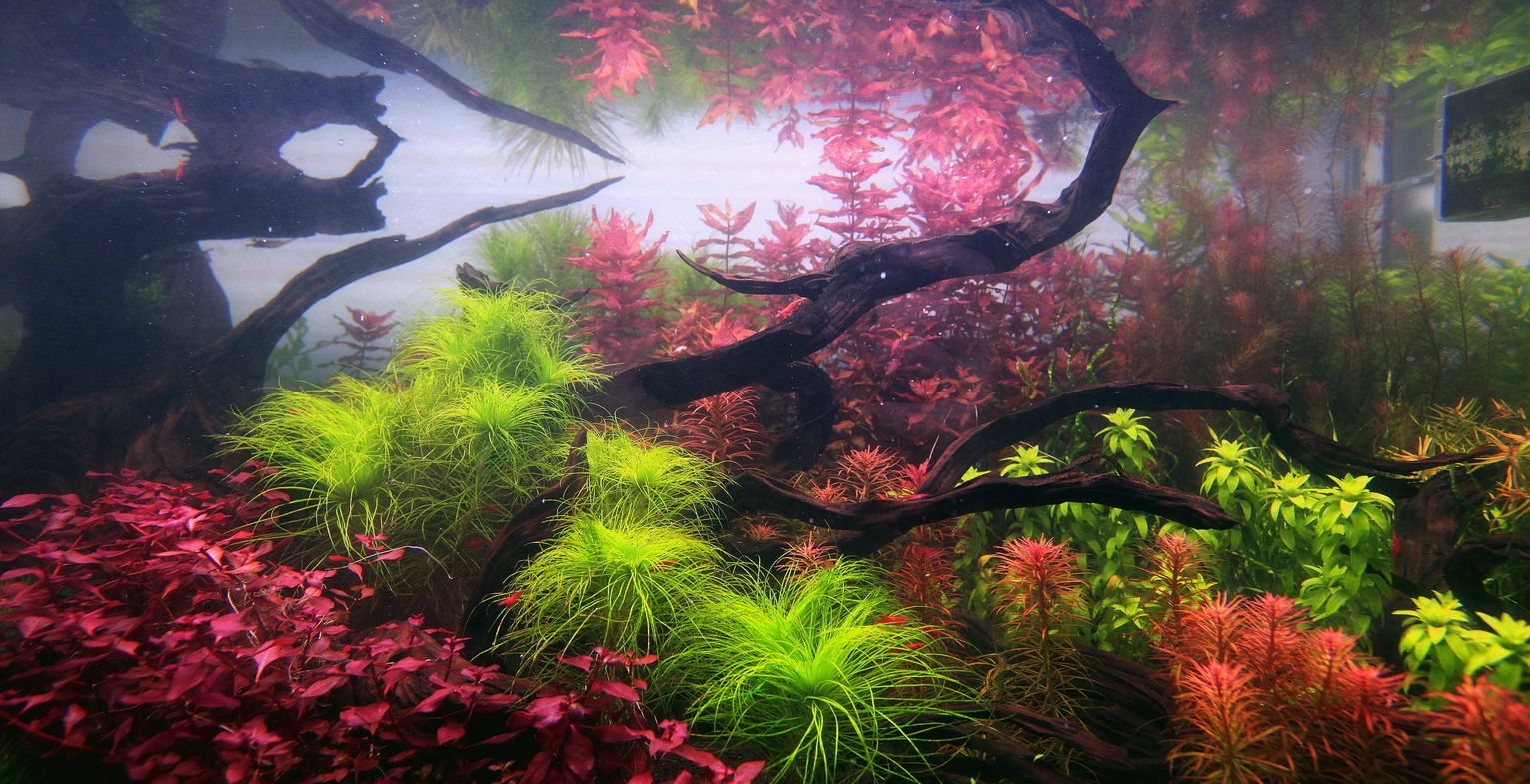
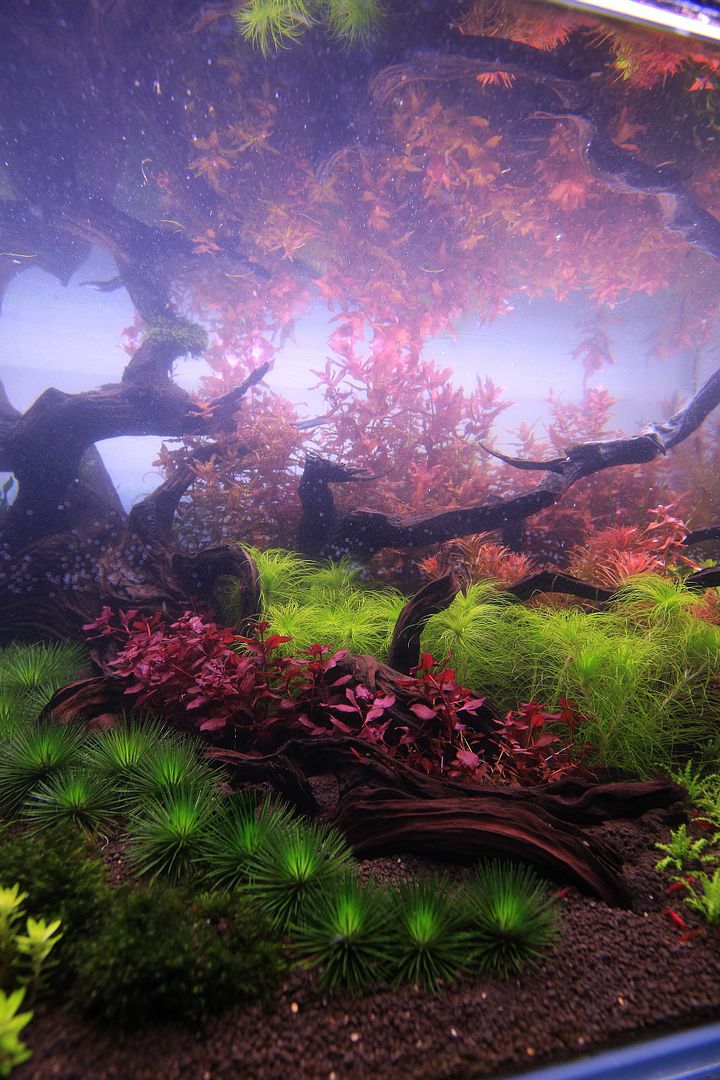
Yes, Manzy wood alos has some rock like attributes. This is a new tank I have not yet finished, I called it "woodagumi", similar to iwagumi:
I can modify and trim the wood much easier than rock/stone. I like rock and stone but it would require a lot more work for me to collect the stone I like. It's here and I have access, but it's just more work that I want to do for the vision I have with it. Maybe I'll find some pieces I like more.
biobiofizicar je napisao:
I counted only 37. Where are the others…č
...I feed quite a bit also, this helps the fire shrimp to breed. Those are then sold for 3$ USD each. Not bad $ for for a tank...
So, others are having sex in the bushes for $....
With all this red plants and "red shrimp action" in the tank you can name it De Wallen (Red Light District) Edited by biobiofizicar on 17.10.2011 15:54
Hi Tom.
Do you know kH value in this tankč
Are you satisfied with Eriocaulon growth.
Tell us something about your experience with this plant and its needs.
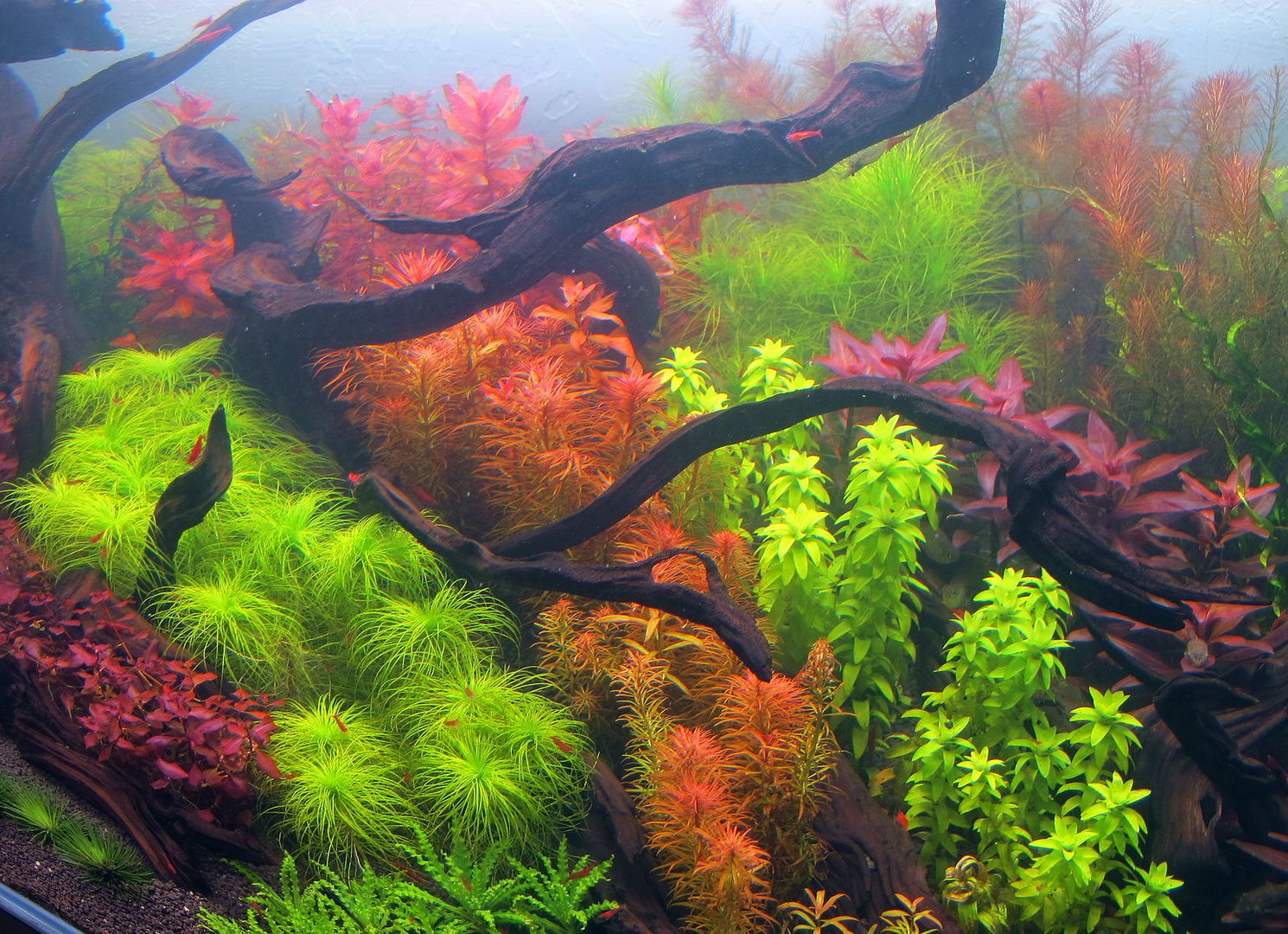
Please post some close up photo of Eriocaulon - we need it for front page.
Hi, the KH is low in these tanks, out Tap is sierra snow melt, roughly 20ppm of KH and about 30-35ppm fo GH, mostly all Ca++, little to no Mg++.
I add more GH about another 30ppm as CaSO4/MgSO4/K2SO4 mix 1:1:2
The right side is going to get a rework this weeke/end etc.
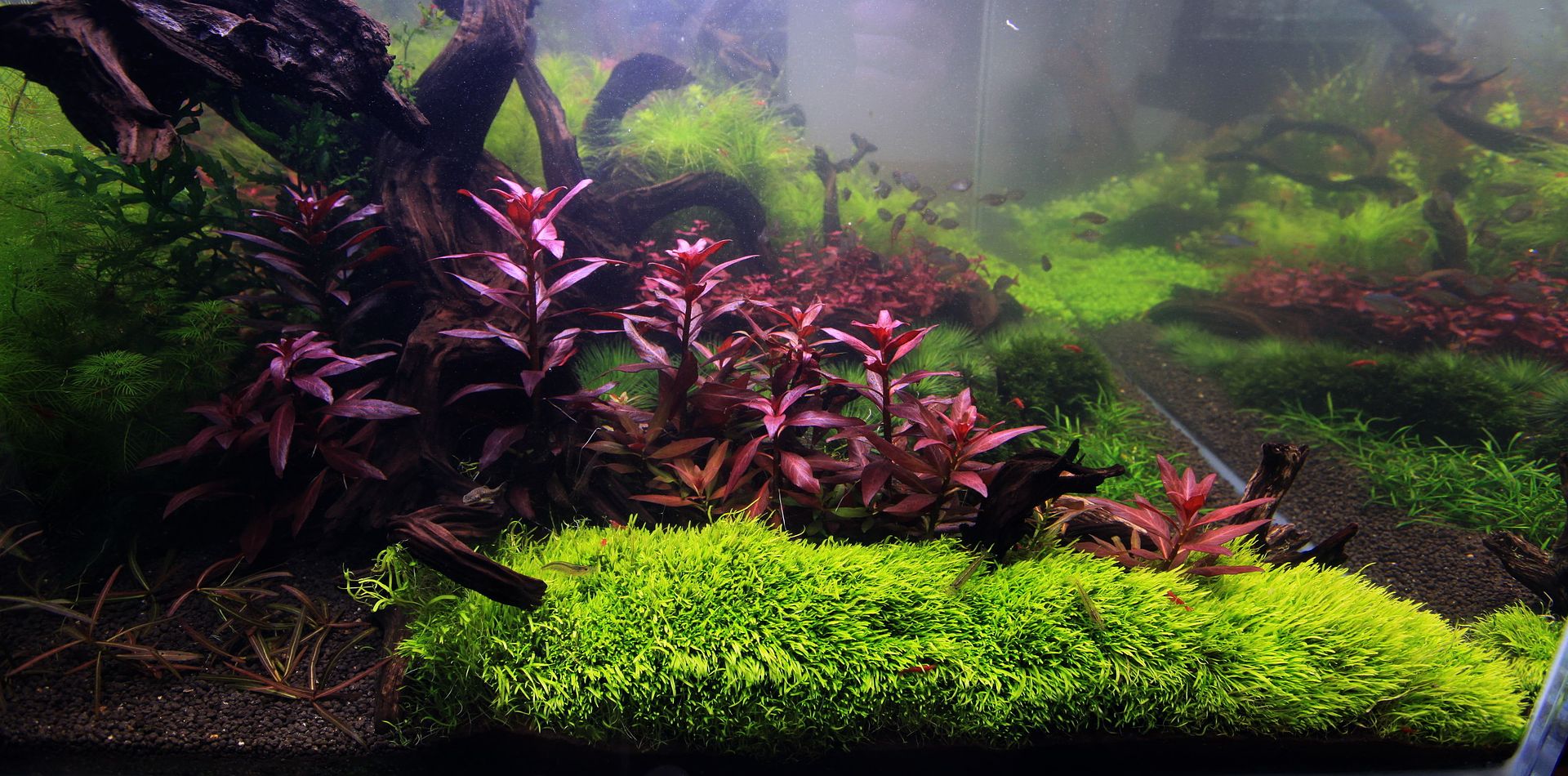
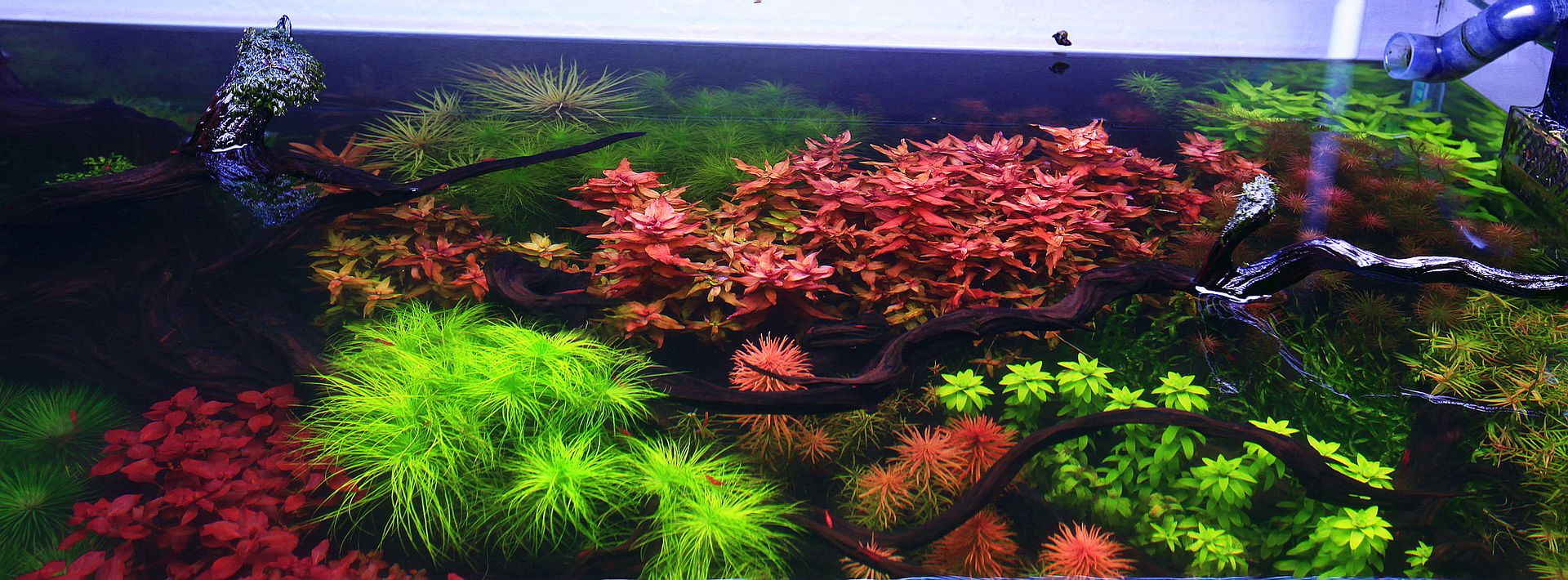
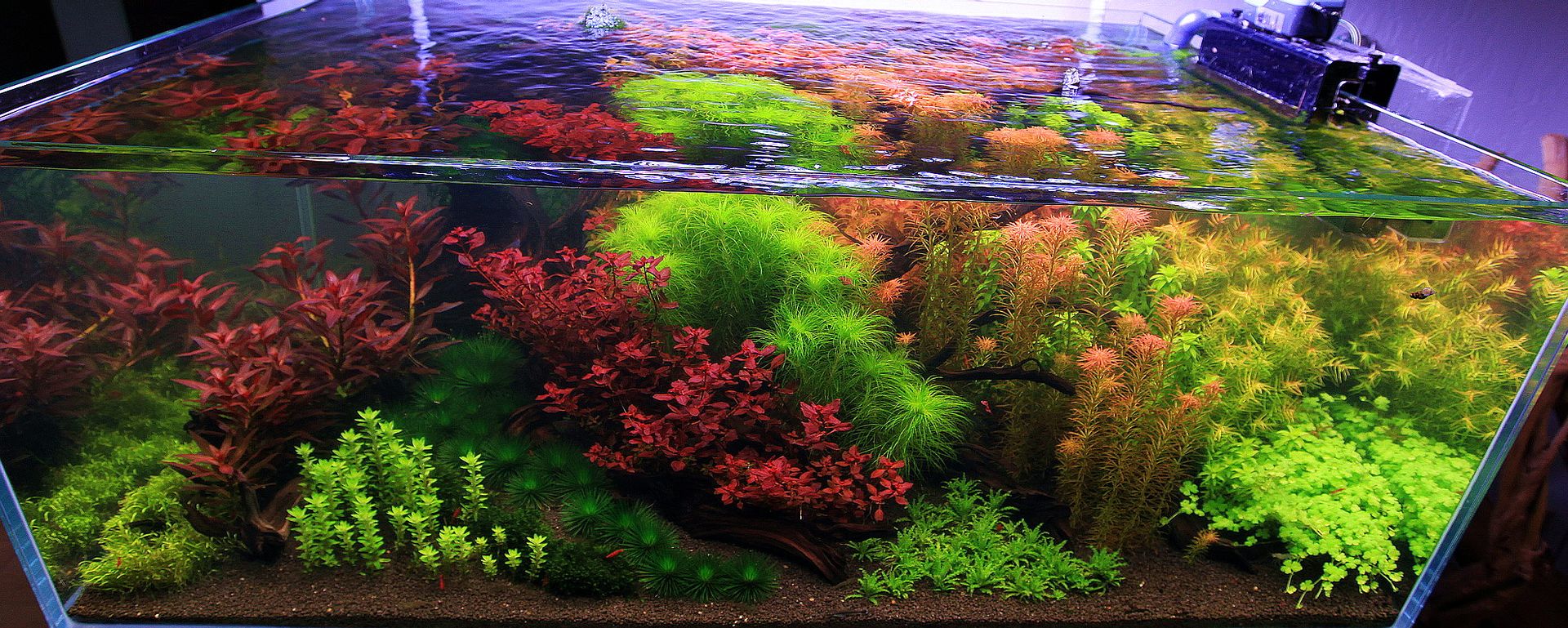
I'll move the Red pantanal one row over next to the large Erio type 3 which recovered nicely away from hungry Fire shrimp, we will see if it stays in good shape or not.
Then the Tonina will move to the Pantanal's spot.
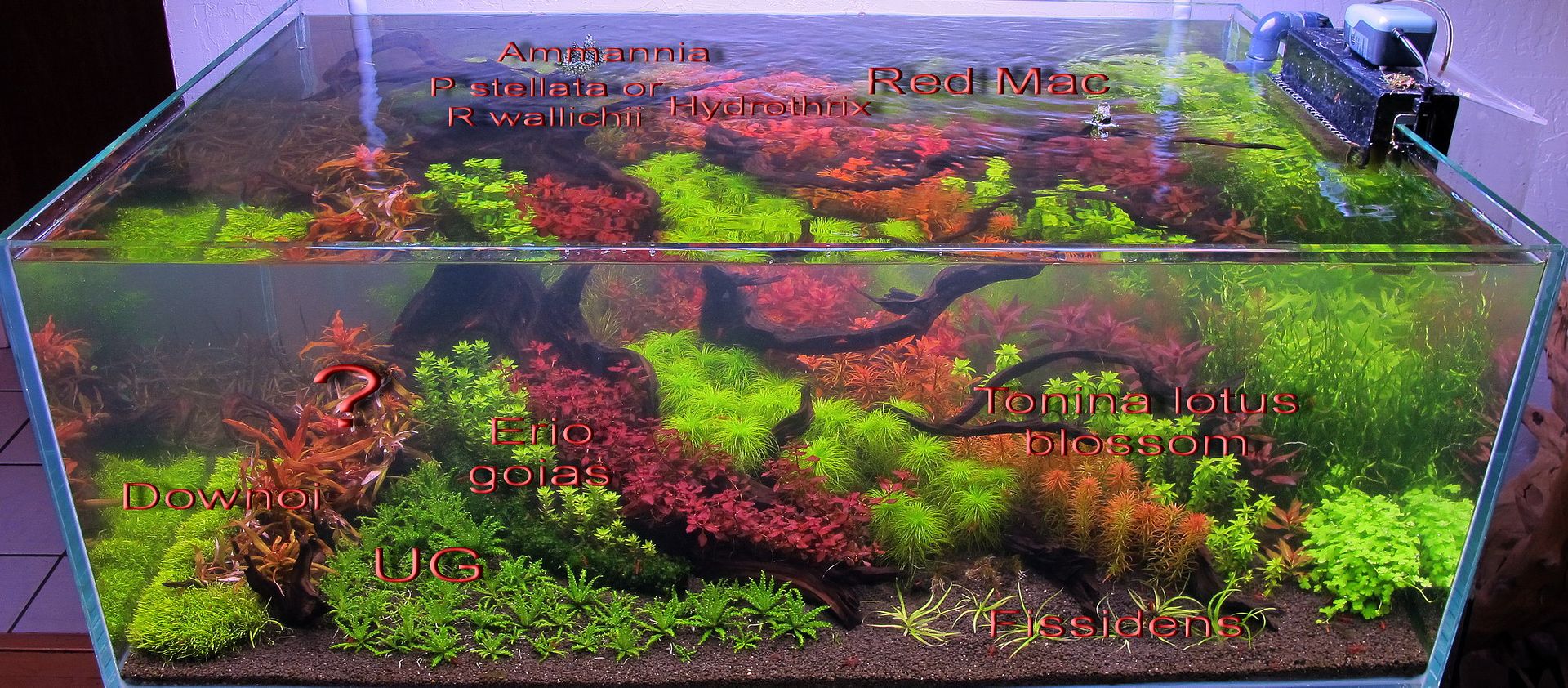
Not sure what to do with the Tonina Lotus blossom, I like the plant, but cannot keep it close to the normal Tonina(which is a better fit for this tank in general).
T. lotus blossom is a neat type however, so I'm very relucant to part with it.
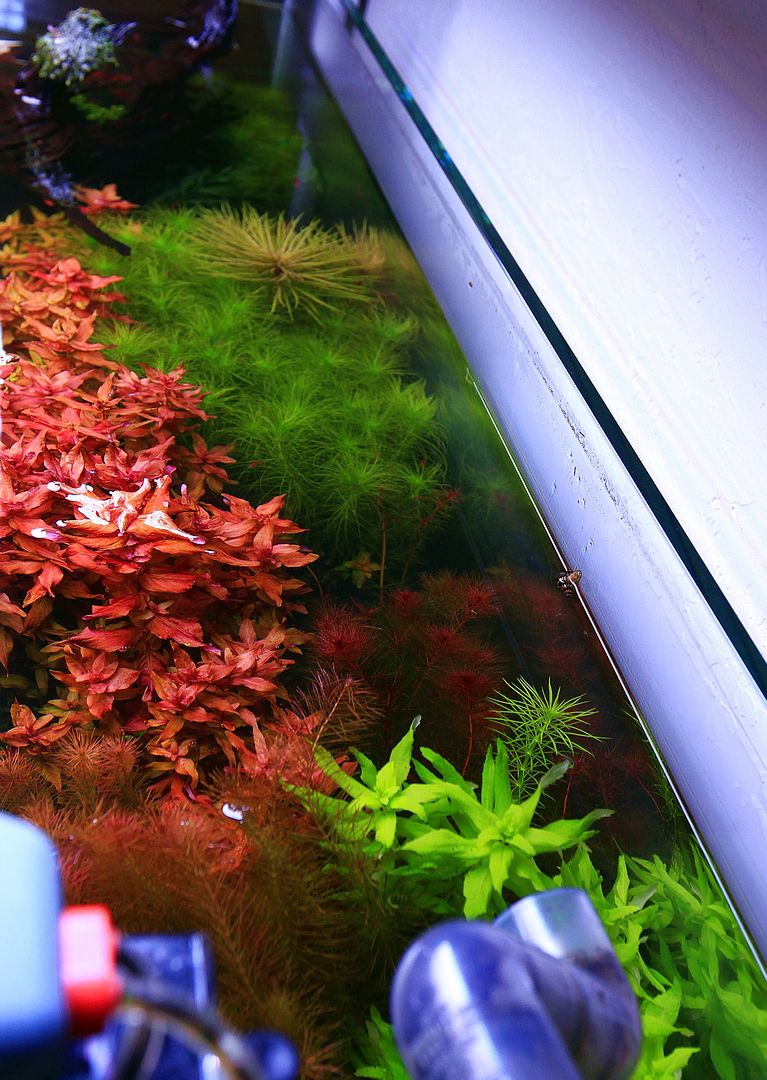
I have some error in a plant order, I was shipped A gracilius but got Nesaea crassilius, which is frankly rarer and a very nice red plant, so I may move the L peruiesis out and over the far L and add the Nesaea in that spot to allow it to fill in nice and fully. Then eventually get the Ammannia for the rear(I can fill in back there with most anything really).
This will add another Red row and keep with the motif of every other one red and different leaf shape and texture.
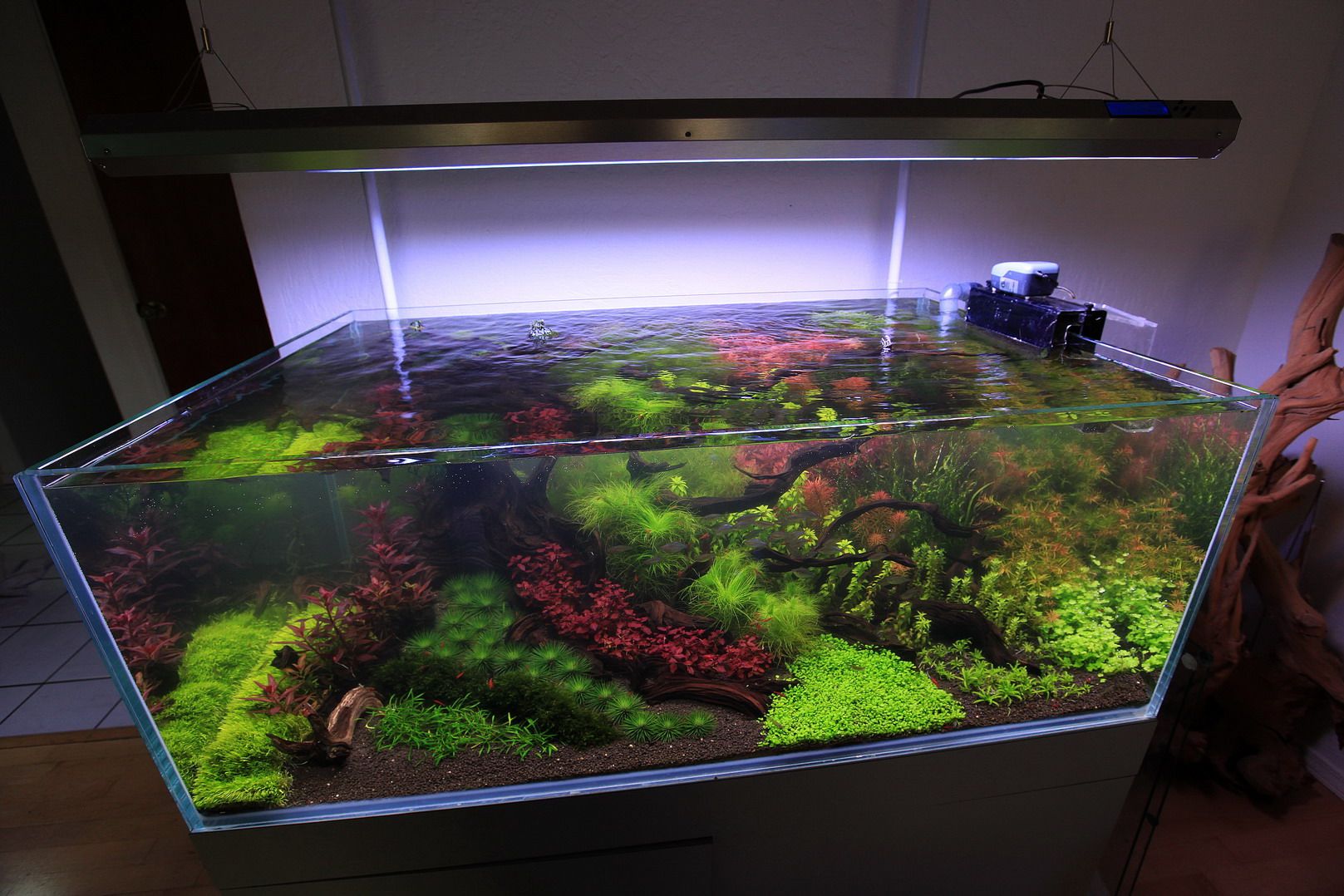
The new bulbs have turned the D diandra very red. I have some H hottoniifolia in the rear corner, but I might just remove it and allow the weird bright green plant I keep forgetting the name of (genus starts with a "P". the grouping got too small I feel and "collectortisy".
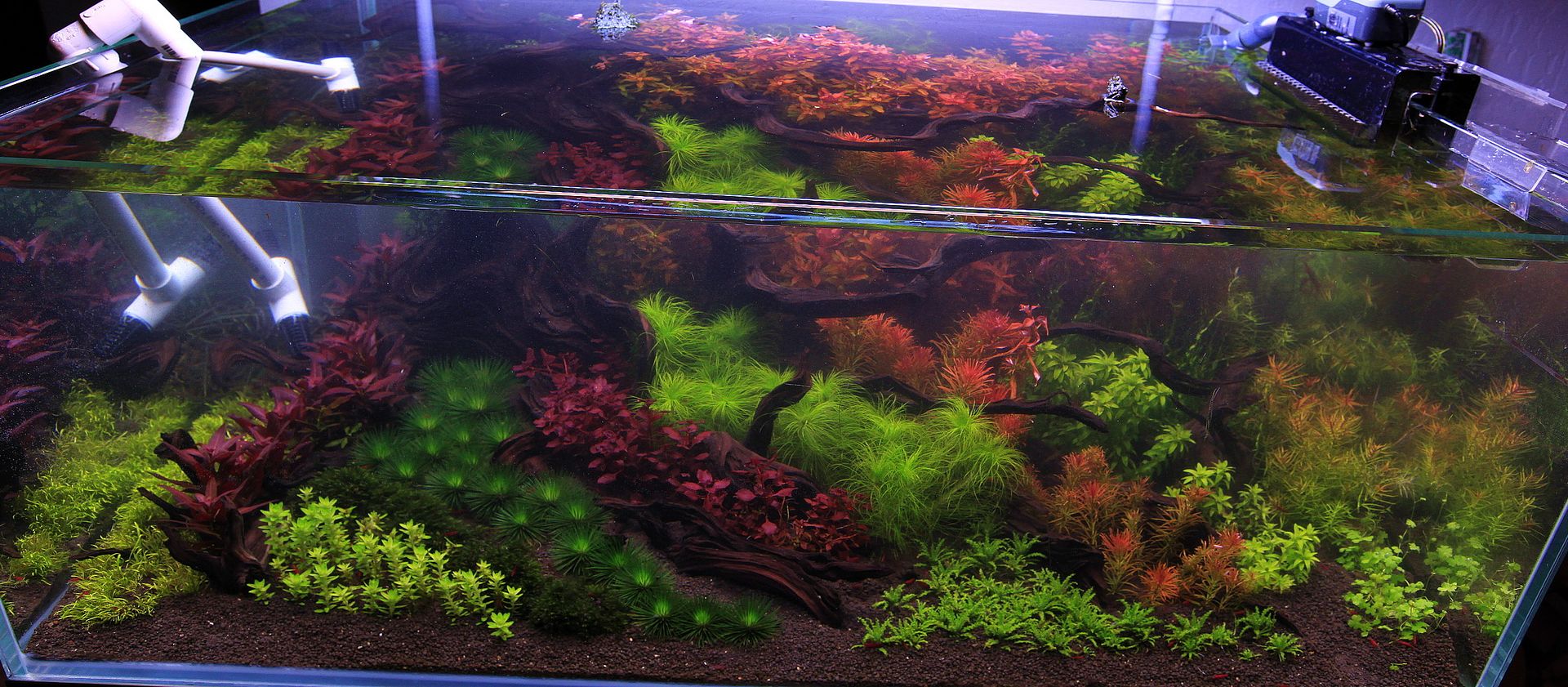
The wood is new and I've yet to reposition this side, but I shall in the week or so. The wood will soon blend in well with the other wood and I need to replant the UG on that side, it's about 4" deep right now.
The corner has the Red lower growing hygro which is a nice low maintenance plant. It'll take a month or two to fill in in the darker corner.
I'll need to thin some thing over on the Far Left side also, but most of the species will still stay as is.
2 biggest issues are if/where to keep: Downoi and the Lotus Blossom.
2 very nice plant species I'd rather keep.
If they can find a suitable home, I'm 80-90% of the way there, then the rest is just pruning and less moving stuff around and trying out various species.
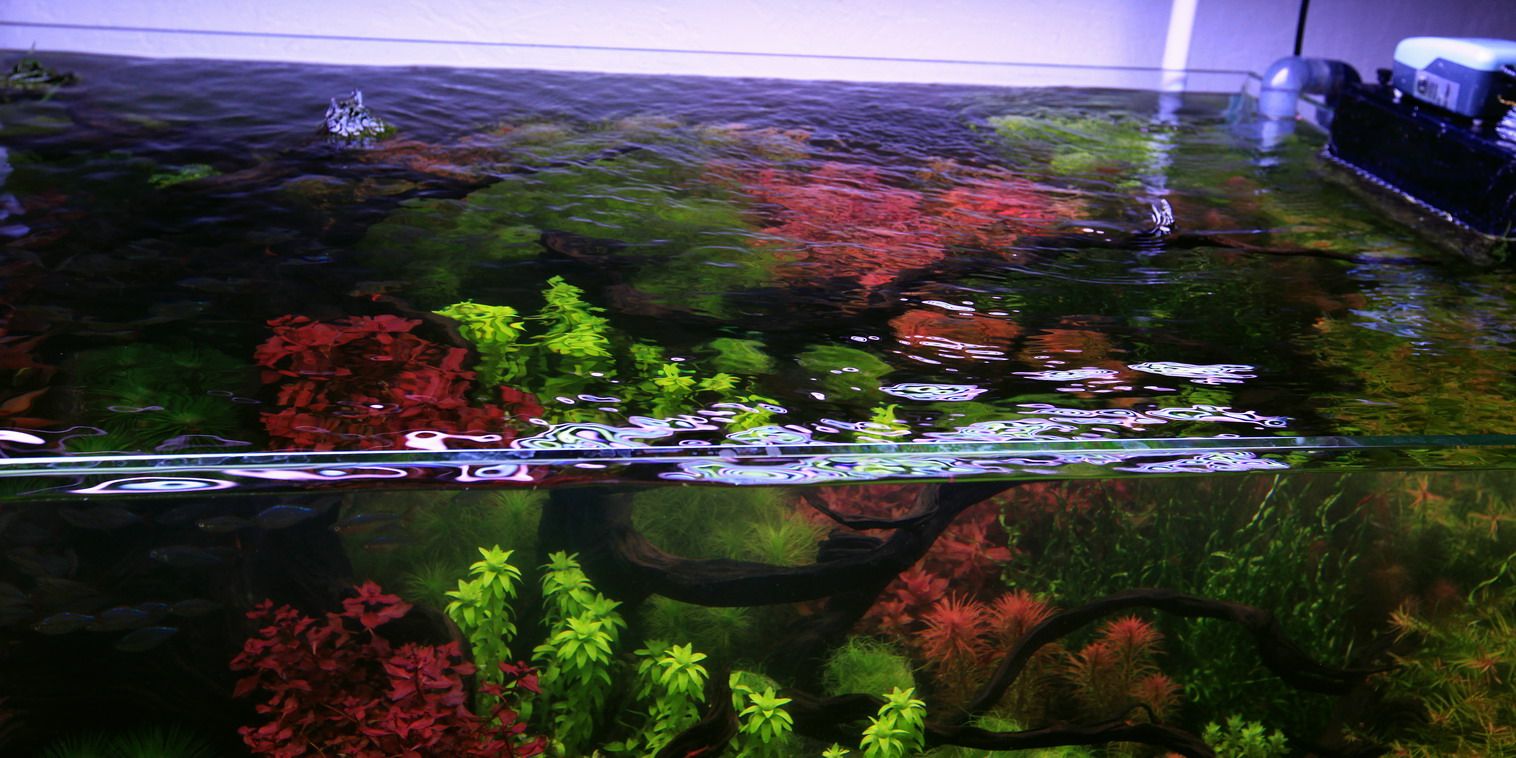
BTW, light is only on for 7 hours, and it takes about 1 hour for the 2x54 W to come on and hit 100%, then the other 6 bulbs come on and it takes them another 1 hour to hit 100%, then at the end, both sets slowly drop off over 1 hour from 100% down to 0%.
So the lights are only on full blast for 5 hours, the CO2 comes on when the 1st pair is warming up, so it's cranked well when the full set starts to fire up.
The CO2 goes off about 45 min before the last bit of light hits the plants.
zander je napisao:
Hi Tom.
Do you know kH value in this tankč
Are you satisfied with Eriocaulon growth.
Tell us something about your experience with this plant and its needs.
Please post some close up photo of Eriocaulon - we need it for front page.
Erios have always been easy for me, like any other plant species etc.
What I find is sometimes certain plants are not as competitive for CO2, or they need more space, room to grow out, not be shaded by other species.
Otherwise, most plants seem t have similar demands and the aquarist may need to see which trimming method is best suited for their goal and to have the plants look nicer over time.
CO2 seems to cause the most issues for aquarist, they do not add enough and have troubles growing nice lusher aquascapes, or they add too much and kill their fish or shrimp.
No one has killed their fish with fertilizer as far as I know, but many spend way too much time fussing with dosing and not enough with light and CO2. I've grown some 300-400 species of plants and done nice examples. So I think I got the growing part down pretty well by now for any species.
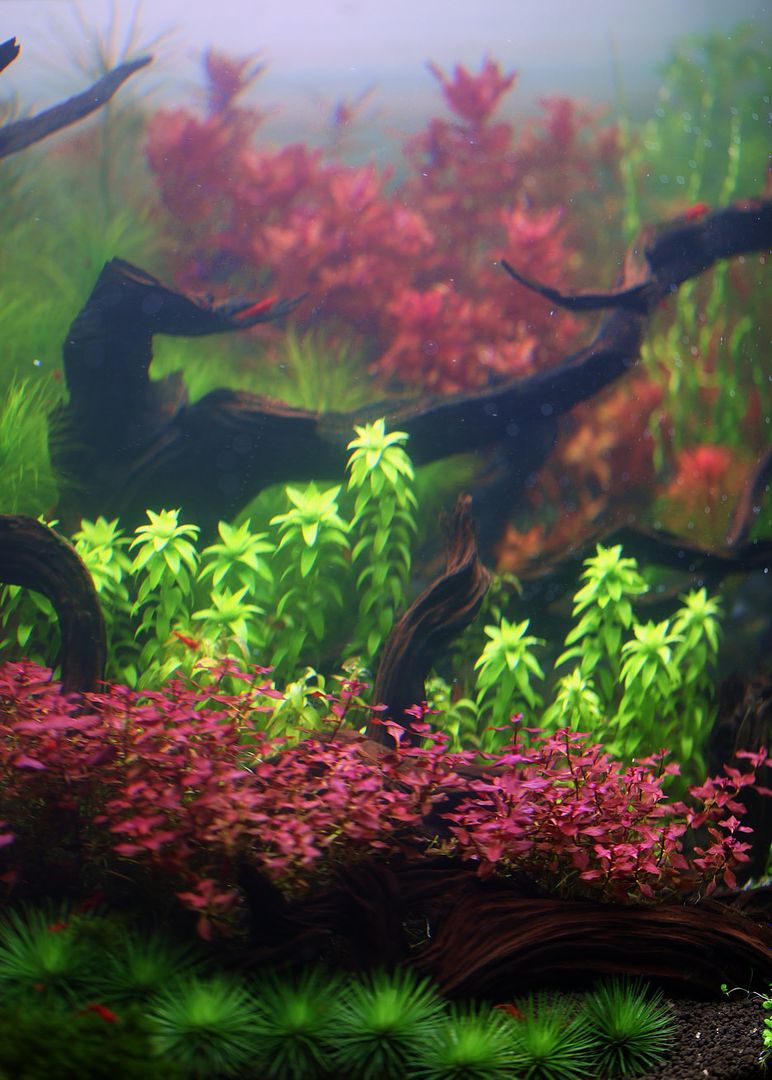
the Tonina lotus blossom needs to grow out and I can trim off the ratty lower parts, some with the lower stems on the regular Tonina, then I need to allow the Red Pantanal to fill in that row fully.
I'm considering replacing the Gloss with the Downoi and allowing the Downoi to fatten up and make a green triangle. Gloss is a bit more work and stays lower in general, nice contrast here. But that was never the original intent either. Downoi is a nice easy plant that would make a nice contrast as well in this same spot.
The last thing is the Nesaea in the rear and the Ammannia gracilius which I have not yet located. I'll get some and make some changes in the shape of the groups in the rear.
Otherwise, as long as the shrimp do not eat the Erios, I'm pretty close to having things stable and where I want.
Then it's trim trim trim and wait for the right timing.
Hvala na ovako opširnom odgovoru. Imao bi ja još dosta pitanja za vas, i to bi se verovatno pretvorilo u kvalitetnu diskusiju, ali bi morao da angažujem prevodioca
----------------
Thank you for such a comprehensive response. I'd have many more questions for you, and it would probably turn into a qualitative discussion, but would have to hire a translator
(ako prevod nije u redu ispravite me)
Edited by zander on 22.01.2012 18:52
zander je napisao:
Hvala na ovako opširnom odgovoru. Imao bi ja još dosta pitanja za vas, i to bi se verovatno pretvorilo u kvalitetnu diskusiju, ali bi morao da angažujem prevodioca
----------------
Thank you for such a comprehensive response. I'd have many more questions for you, and it would probably turn into a qualitative discussion, but would have to hire a translator
(ako prevod nije u redu ispravite me)
Haha,
You can use the "translation engines", then translate it back into Serbian to check to make sure it is close, correct etc. You should use simple phrases when using translation engines.
zander je napisao:
Hvala na ovako opširnom odgovoru. Imao bi ja još dosta pitanja za vas, i to bi se verovatno pretvorilo u kvalitetnu diskusiju, ali bi morao da angažujem prevodioca
----------------
Thank you for such a comprehensive response. I'd have many more questions for you, and it would probably turn into a qualitative discussion, but would have to hire a translator
(ako prevod nije u redu ispravite me)
Haha,
You can use the "translation engines", then translate it back into Serbian to check to make sure it is close, correct etc. You should use simple phrases when using translation engines.
Ok.
In your topic in the ASW forum I read that you are adding 1.2-2.0 ppm Fe.
How much of that amount is gluconat, and how other Fe chelates, and what are chelatesč Is it in the pictures a little whitish water, because adding gluconateč
What is the weekly intake of nitrogenč Is it just KNO3, or add something else (NH4NO3, urea ...).
I would be interesting to know the value of PO4, whether you are doing and adjust the value of looking at plants, for example, or to hold a standard (normal) concentrations (for example from 1-5ppm or more)č
If you use some other soil except aquasoil, how results can be compared with such a little demanding plants such as Eriocaulon, Tonina and other plants. How do you think that a good soil importantč
In my aquarium for example, I have a problem with leaf curling for species such as Nasaea P. and Ammania G far as I noticed that I add anything of fertilizer in the water column (KNO3, K2SO4 ...), but if I do not add anything, then it creates problem plants such as R wallichii and others. The problem is probably something else with leaf curling, but ...
I see that all these plants in your aquarium to mention very nicely fit and look very healthy.
Nice pictures! Edited by zander on 23.01.2012 01:12
In your topic in the ASW forum I read that you are adding 1.2-2.0 ppm Fe.
How much of that amount is gluconat, and how other Fe chelates, and what are chelatesč Is it in the pictures a little whitish water, because adding gluconateč
Hi, no, the water is hazy because of the replanting.
I use the trace mix:
6 tsp(5 mls) CMS+B
2 tsp(5mls) DTPA Fe
2 tsp(5mls Fe Gluconate
500mls hot water
20mls Excel
This does not cloud the water. My hands and pruning cloud the water
ADA aqua soil is "dusty" when you move plants and uproot.
What is the weekly intake of nitrogenč Is it just KNO3, or add something else (NH4NO3, urea ...).
I dose about 15ppm 3x a week of NO3 as KNO3.
I dose about 5ppm 3x a week PO4 as KH2PO4
The tap water is soft, about KH 20ppm, GH about 30ppm.
I add GH booster after water changes, about 5mls per 200 liters.
I guess I have done this for about the last 6- 7 yearsč
I would be interesting to know the value of PO4, whether you are doing and adjust the value of looking at plants, for example, or to hold a standard (normal) concentrations (for example from 1-5ppm or more)č
[quote]
No, I honestly do not fiddle with nutrients and dosing much any more. Does not matter, what matters: light and CO2. And also just good general care, trimming, pruning, gardening, water changes etc.
Amano makes a strong point of this......but few listen, they are more worried about Penac of other silly things and miss the main points that ADA is trying to help hobbyist with: good horticulture/gardening techniques.
[quote]
If you use some other soil except aquasoil, how results can be compared with such a little demanding plants such as Eriocaulon, Tonina and other plants. How do you think that a good soil importantč
Seems to help, most that have had plain sand and switched seem to think so. I'm not so sure it is critical to any species, but lower KH seems to be.
Still, adding a good aesthetic looking sediment that also has nutrients, can only help the aquarium. Sediment and the water column work together. This way if you forget to dose, or if want the sediment to last longer, doing ...both methods... makes the most sense.
You can use garden soil, clay loams from rivers and streams etc......these grow the plants just as well, but you need a top layer of sand etc as a "cap". I do not like caps personally, never have.
In my aquarium for example, I have a problem with leaf curling for species such as Nasaea P. and Ammania G far as I noticed that I add anything of fertilizer in the water column (KNO3, K2SO4 ...), but if I do not add anything, then it creates problem plants such as R wallichii and others. The problem is probably something else with leaf curling, but ...
These species, are really CO2 demanding.
I can dose rich and not have any issues at all with them.
I might grow some Nesaea for a nice yellow color in this tank, but I like red and green right now. I have Ammannia in the background but you cannot really see it since the distance is so far back. I have Nesaea crassiculis right now. It is also in the rear of the tank.
I've heard rumors and claims about curling leaves on these species for over 12-15 years now, and I've not had any issues growing them quite large and nicely.
They stunt if the CO2 changes too much it seems.
They grow fine in flourite or onyx sand also and even plain sand, all 3 of these species in fact.
I see that all these plants in your aquarium to mention very nicely fit and look very healthy.
Nice pictures!
And that is all the real proof one needs to see that it's not the nutrients really.........rather...there other factors that make nutrient dependent. I do not have to fuss with nuttrients and the plants grow like mad.
I do not need to micro manage the nutrients at all.
CO2 and light are huge and larger players. CO2 is critical and many think they just set CO2 at 30ppm and that is fine.
It is not, my CO2 is 45-55ppm in this tank above.
My 180 Galč 70ppm
70 Galč 60ppm.
I do not target a CO2 ppm rally.
I watch the plants carefully and slowly adjust the CO2 up till the plants grow nice. I think many hobbyists get impatient or rush too much, perhaps do not have enough surface movement and gas or kill their fish.
If you limit a nutrient strong enough, then the limitation for CO2 will go away and some plants do fine, but others still suffer.
Also, some plants are better at getting limited CO2 while others are not.
Still "Liebig's Law of the Minimum" applies to CO2 as well as nutrients.
A few good trims and grow out and the front rows will be up to snuff at least. I need to grow out the Ammannia more in the rear, but the R macrandra is coming along well, the older lower leaves are pretty pale, but a few trims later, they will be all red and make a nice mid wall in the back there.
One trick is to allow the plants to grow up and hit the surface for about a week or so, then replant. I have not yet done this with this tank, but plan to later.
The Downoi is making a come back, all I had were trimmed off bottom stumps, so it's come a long long way and will fill in decently.
Some of the other plants will grow in nicely and I've found using a turkey baster works well to clean the Erio cinreums' middle parts and keep those cleaner.
I am pondering adding the Red serpae tetras to this tank and moving the Rainbows. The tetras will eat the smaller shrimp for sure though, which I thought the rainbows would, but..they have not yet.
Moving the Ludwigia peruensis back over to that Right side was wise.
I likely should make a row for the Downoi, but there are few locations.
I would have to move another green plant in order to do so. I like having the normal Tonina and it's bright green contrast well, but I have a nice little row on the Tonina lotus blossom now also. For this scape, the smaller lotus blossom is more suited if I had to give one up.
I can also sell the Downoi easier and it's less trouble trimming than the normal Tonina which grows really fast, but the bottom portions do not do well since there is so many other plants around the lower stump leftovers.
If I did not have a scape, just a grow out tank, then this would be a great thing, but........that's not the case.
I've trimmed things down a fair amount in last scape, the back is opened up and I think I've found a good home for the Hydrothrix.
I sort of do not like Hydrothrix being next to the R wallichii and the Red Myrio though. All are fine needle plants, but very different color shades though.
After a few more trims, the L. pantanal will be looking nice and even/more ordered. 5-6 stems of the Ammannia have straighten up and have no stunting, but others came in stunted, so I have to wait for new sprouted tips.
Some nice growth from the Ammannia and in a few weeks, that will provide some nice ordered red growth. I have never kept Ammannia shorter nor in light this intense. It should develop rich coloration.
I've been pondering buying a different larger wide leaf brighter green Erio to replace the Erio cineruems that have become quite large. I sold off 8 of them already.
I buy them smaller, then sell for 2-3x what I paid, but some rare more $$$ species might work better. Growth is so slow, they really do not make enough $ for the E cinerums.
Some of the others run 30-50$, the large cine's run maybe 15$.
But also, a nice E. "gioas", about Grapefruit size and 5-9 of them, would break things up. I likely will not mess with it just yet.
In other news, I should have my 180 Gallon's ATI lighting set up next week, or this week hopefully.
Still pondering species that are both rare and eclectic and if the more common, but tasteful species can be replaced. I love Rotala wallichii, but it's dirt cheap to buy, same with Rotala macrandra, Red milfoil but they are good in other ways.
I've tried these species as rows..........but they tended to have more ratty and less ordered looks to the row. They are fine for the mid and back ground groupings, but less so for the front rows.
I can plant them for a few days etc, and have then very ordered, but this will not last long without a fair amount of trim labor. To me, this would seem "forced" and not good horticulture.






 only 37. Where are the others…č




 . the grouping got too small I feel and "collectortisy".